
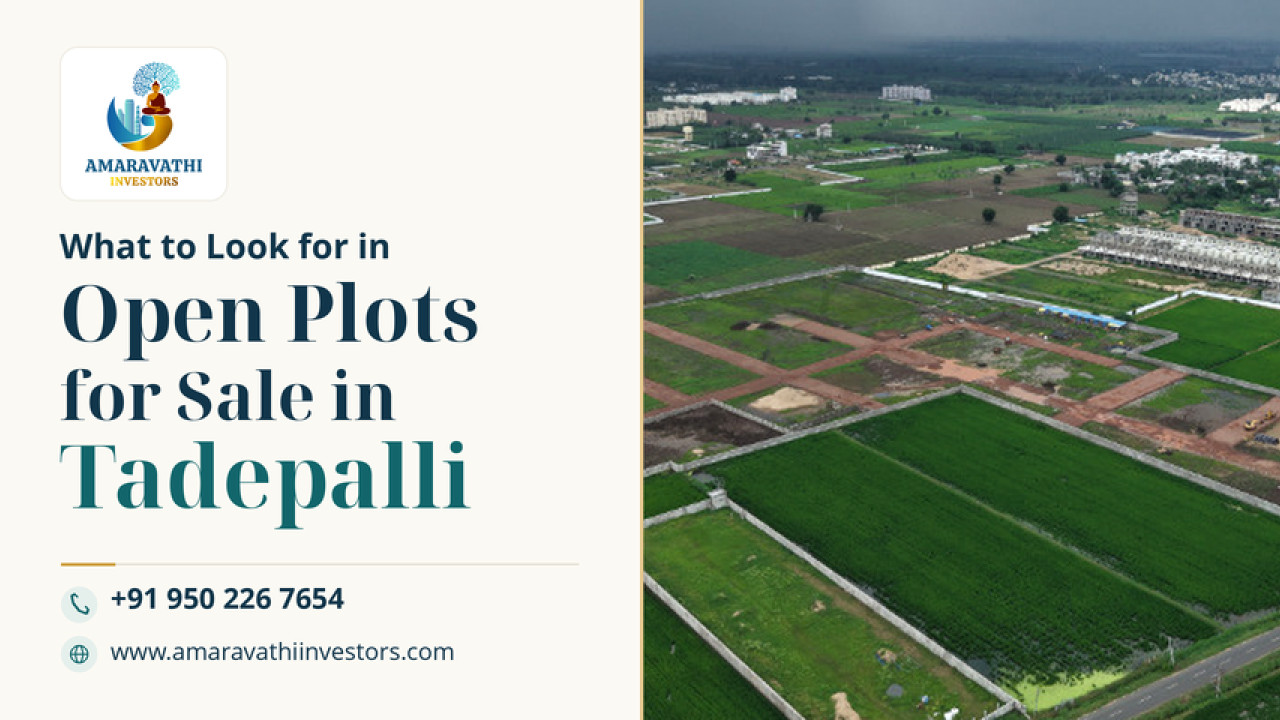
When comparing open plots for sale in tadepalli, start with the seller’s title, the plot’s permitted use, and legal access from a public road. Then inspect the boundaries, drainage and utility connections and work out the full purchase cost. A plot may look ready for a house from the road, yet the land records or a visit after rain can change your decision. Ask for the survey number, subdivision and plot number early so you can verify that the documents, the approved plan and the land on the ground describe the same property.
1. Decide What You Need From the Plot
Start with how you intend to use the land. If you plan to build soon, look for a site that contractors can reach with a practical route for water and electricity connections. If you plan to hold the plot, estimate fencing, upkeep and periodic inspections. If you expect to resell, think about what a future buyer can verify without relying on the original seller’s assurances.
Compare actual routes towards Vijayawada, Mangalagiri or Amaravati based on the journeys you expect to make. Start your test drive at the plot entrance and take it during your usual travel hours. Check the last stretch for sharp turns, narrow junctions and shortcuts through private land. For a family home, try the routes to schools, medical care and everyday shops. Take the return trip as well. A median or a junction may send you on a longer route back.
2. Match the Plot on Paper With the Plot on Site
Ask the seller for the exact revenue village, survey number, subdivision, plot number, area and four boundaries. A listing may use Tadepalli as a broad location label, while the governing documents identify the parcel by its revenue village. A plot number alone also tells you little because several layouts can have a Plot 24.
Compare the property schedule in the deed with the authenticated layout plan and applicable survey records. Have a qualified surveyor locate the corners, verify the frontage, and check the site for boundary overlaps. Walk the perimeter with the surveyor, even if the developer has already put up markers. If a neighbour’s wall occupies part of the parcel or a drain crosses one edge, find out what the records show before you calculate the usable area.
Ask the seller to resolve material discrepancies in writing and, where necessary, correct the records before signing. The property schedule in the sale deed should describe the exact land you inspected.
3. Verify Ownership and the Seller’s Authority
Ask a local property lawyer to review the seller’s registered title deed and the earlier deeds that show how ownership passed from one party to another. The lawyer should check that the property description stays consistent where relevant and that the documents explain any change in survey number, area or ownership. If the seller inherited the property, ask which succession documents establish ownership and who must sign.
Obtain a recent Encumbrance Certificate for the parcel and have your lawyer determine the search period and identifiers to use. The certificate can help identify registered dealings such as mortgages or earlier sales for the period searched. Ask your lawyer to check other relevant records for disputes, claims or registration restrictions and reconcile any differences between the deed and revenue records.
Where a promoter sells land owned by someone else, ask for the relevant development agreement and the document that authorises the sale. If an agent presents a power of attorney, have your lawyer verify its scope and validity for the specific transaction. For a plot under mortgage, establish what release documents the lender or authority must issue and when you can obtain them.
4. Check Layout Approval, Land Use and AP RERA Status
Ask for the layout permission number, the approval proceedings and the sanctioned drawing. Confirm the competent authority for the parcel and verify the documents with that authority. For layouts within its jurisdiction, the Andhra Pradesh Capital Region Development Authority, or APCRDA, provides approved layout and planning records. Match the plot number, survey details and road frontage with the approved drawing. Check whether a revised plan affects the plot, its access or the surrounding common areas.
Next, verify the current land use for the survey parcel under the applicable plan and any subsequent amendments. Check for road widening, watercourse buffers or reservations that could affect construction. If the seller mentions regularisation, ask for the final documentation that applies to the individual plot. If the seller says a land use change is in progress, ask the planning authority what use it currently permits.
For a plotted development that requires registration with the Andhra Pradesh Real Estate Regulatory Authority, verify the AP RERA number and check that the project entry covers the advertised phase. Review the promoter’s name, completion timeline and development commitments. If the promoter claims an exemption, ask for the basis and have your lawyer check it. Project registration, planning permission and the seller’s title each require a separate check.
5. Inspect Drainage, Flood Exposure and Ground Level
In parts of Tadepalli near the Krishna River, inspect drainage and flood exposure at both the plot and the approach road. Check available flood records and ask nearby residents where water collected after heavy rain and how long it stayed. If possible, visit after rainfall. Look for standing water, blocked outlets, silt deposits and signs that the road becomes difficult to use.
Compare the ground level with the road and adjoining plots. A site that sits well below the road may need additional filling, drainage or a higher plinth. On recently filled land, ask an engineer about settlement and the need for a soil investigation before you rely on a construction estimate. Where rainwater runs off an uphill site, check whether it drains across the parcel you intend to buy.
If the plot borders a canal, drain or embankment, check the relevant planning records for restrictions and ask where water from the layout is meant to discharge. Include any site preparation the engineer recommends in your budget.
6. Confirm Road Access and Utility Connections
Trace the route from the plot to a public road. On the sanctioned plan, locate the internal road, check its approved width and identify where it connects to the public road. On site, look for narrow stretches, gates and any portion that passes through private land. Ask your lawyer to confirm documented rights of access where the route depends on private property.
Ask the seller to explain which services you can use immediately and what still needs work. For water, identify the source and ask who arranges the connection. For electricity, check the process and likely cost of bringing a connection to the plot. For wastewater, confirm which disposal arrangements the authority permits. A nearby pole or water line gives you a place to start the enquiry. Ask the service provider what it would take to connect your parcel.
If the promoter promises paved roads, streetlights or stormwater drains, ask for an itemised list with completion dates. Check which works the agreed price covers and who will maintain common facilities after handover. A second visit at dusk can also reveal how much of the approach road has lighting.
7. Measure the Space You Can Actually Build On
Compare frontage, depth and shape alongside the total area. Two plots of 200 square yards can accommodate different house plans if one has a narrow entrance or an angled boundary. Take a rough floor plan to a local architect and ask how the applicable setbacks and access requirements would affect parking, room widths, stairs and outdoor space.
If you prefer a particular orientation, use it to evaluate where daylight enters and how the entrance would work with the road. On a corner plot, ask the architect to account for both road frontages before you pay a premium. Check where vehicles can enter and whether a turning radius, utility corridor or proposed road widening would limit the area available for construction.
If you intend to build later, note any current restrictions and keep the survey sketch and sanctioned layout. When the time comes to apply for building permission, those records will help your architect check the parcel against the rules that apply then.
8. Compare the Full Cost and Resale Prospects
Request a written price per square yard and confirm the area the seller uses to calculate it. As an illustration, 200 square yards at ₹25,000 per square yard gives a base price of ₹50 lakh. Ask for an estimate of stamp duty and registration charges and list any brokerage, development or utility charges that apply. Budget separately for fencing, filling or drainage if the site needs them.
Use the same calculation for each shortlisted site. For your market comparison, look for recent registered transactions where you can obtain reliable information, then compare plots with similar approvals, road access and development status. An asking price shows what a seller wants. The registration department’s valuation reflects its assessment for registration purposes. Record which figure you are using when you compare prices.
If resale matters, look for reasons another buyer would choose the plot, such as a usable frontage, clear access and straightforward documentation. Build your budget around amenities and roads already in service. Treat announced infrastructure as a possible future benefit and check its official status before assigning it any value.
9. Put Payment, Possession and Promises in Writing
Before you pay a token amount, ask who will receive it, what it reserves and whether you can recover it if a title defect, approval problem or survey discrepancy surfaces. Have your lawyer review the booking terms and confirm what RERA requires for the payment and agreement, where applicable. Use a traceable payment method and obtain a receipt that identifies the plot and records what the payment covers.
Check that the agreement records the full property description, total consideration, payment milestones, responsibility for charges and the possession date. For a developing layout, specify which roads and services the promoter will complete and by when. If the lender refuses financing or the seller misses a deadline, the agreement should explain what happens to the money you have paid.
Walk the property again before registration. Recheck the boundary markers and access, and ask your lawyer to confirm that any required mortgage release or other outstanding document has arrived. At handover, get a written record of possession and identify who will handle changes to the applicable property records.
10. Use the Same Checks for Every Shortlisted Plot
Keep a single comparison sheet for the plots you visit. Give each one a row for the revenue village and survey number, verified title status, approved use, access, flood or drainage observations, utility status and total cost. For every unanswered question, record who can confirm the answer and whether you need an official document, a professional opinion or another visit.
For example, two plots may both fit your budget. One may have a wider frontage and electricity nearby, but its access road passes through land that the seller’s papers leave unexplained. The other may need minor filling, with documented access and an engineer’s cost estimate. Put figures beside issues you can price and keep ownership, access and approval questions open until someone can substantiate the answers.
Save the approved plan and your site photographs under the same plot number. If the seller changes the offer or suggests a different plot in the layout, repeat the parcel checks before you transfer the booking.
Conclusion
The right plot in Tadepalli should have verifiable ownership, a permitted use that fits your plans, documented road access and a total cost you can afford. Visit the site, match it to the records and resolve any uncertainty before you commit. If you are comparing options with Amaravthi Investors, bring the survey number and plot number for each property on your shortlist so the conversation starts with the exact parcels you are considering.
Frequently Asked Questions
1. What should I check first when buying an open plot in Tadepalli?
Check who owns the plot, what you can use it for and whether it has legal access to a public road. Get the revenue village, survey number, subdivision and plot number so you can match the seller’s documents with the planning records and the physical site.
2. How can I verify APCRDA layout approval for a Tadepalli plot?
Ask for the layout permission number, approval proceedings and sanctioned plan. If APCRDA is the approving authority, check those details against its records and confirm that the drawing identifies the exact plot, survey number and road frontage. Ask whether a revised plan applies.
3. Does every open plot for sale in Tadepalli need AP RERA registration?
Registration depends on whether the plotted development falls within the scope of RERA and whether an exemption applies. For a project that requires registration, verify the AP RERA number and the relevant phase. For an individual resale, establish whether the plot forms part of a registered development.
4. Which documents should I ask for before buying a plot in Tadepalli?
Request the seller’s registered title deed, prior deeds, a recent Encumbrance Certificate, applicable survey records and the sanctioned layout where relevant. Depending on the transaction, you may also need inheritance documents, a power of attorney, a development agreement or a mortgage release.
5. What does an Encumbrance Certificate tell me about a plot in Andhra Pradesh?
An Encumbrance Certificate reports registered transactions or interests found for the property and period searched, such as sales or mortgages. A property lawyer can use it alongside title deeds, revenue records and other searches to assess the seller’s title and any restrictions.
6. Can I build a house immediately after buying an open plot in Tadepalli?
Check whether the current land use permits a home and obtain the applicable building permission before starting work. Ask a local architect to check the proposed design against setbacks, road access and any restrictions that affect your exact survey parcel.
7. How do I check flood risk for a Tadepalli plot near the Krishna River?
Check available flood records, compare the site elevation with the road and inspect nearby drains. Ask residents where water has collected during heavy rainfall and whether the approach road remained usable. A visit after rain can reveal ponding or drainage problems that you might miss on a dry day.
8. How do I calculate the full cost of an open plot in Tadepalli?
Multiply the verified plot area by the agreed price per square yard. Add applicable stamp duty, registration charges, brokerage and development fees. Include any spending you expect on utility connections, boundary work, soil filling or drainage so you can compare the cost of each site on the same basis.
9. How can I confirm that a plot has legal road access?
Trace the route from the plot boundary to the public road on the sanctioned plan and inspect the same route on site. If any section crosses private land, ask your lawyer to verify the documents that give the plot owner a right to use it.
10. What should I check before paying a booking amount for a Tadepalli plot?
Get written terms covering the exact plot, the amount, the recipient and the refund conditions. Where Section 13 of RERA applies, a promoter must enter into and register a written agreement for sale before accepting more than 10% of the plot price as an advance or application fee.